FedEx Freight’s Spinoff Signals A More Competitive LTL Market: What Freight Brokers And Shippers Should Watch
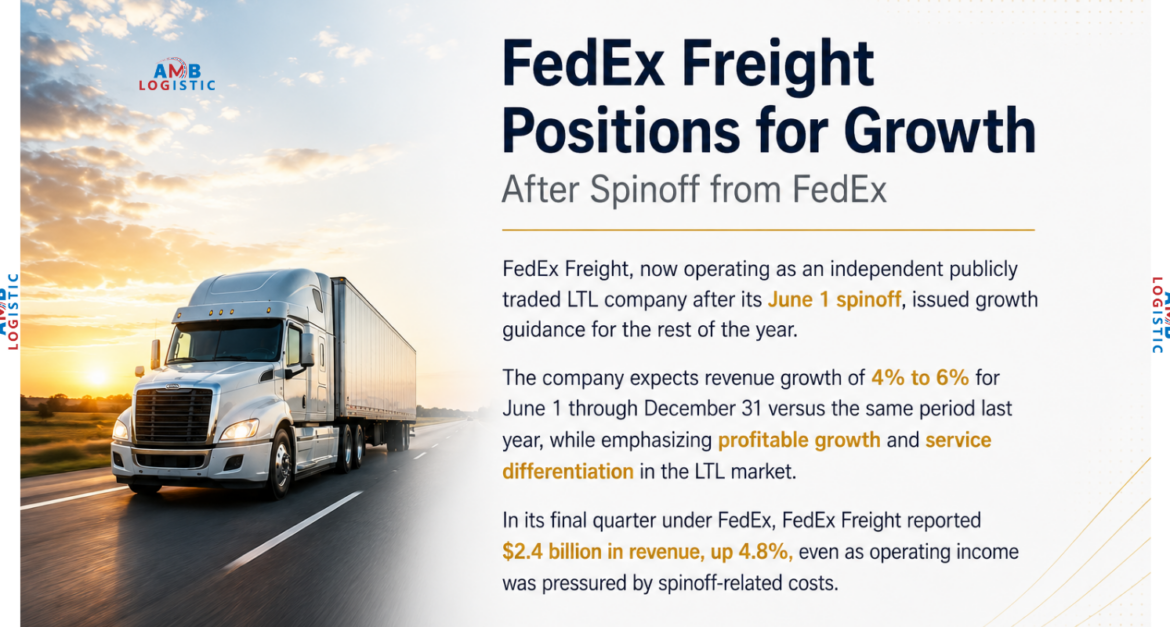
FedEx Freight is now operating as an independent publicly traded LTL company after its separation from FedEx. The company is guiding for revenue growth through the rest of the year and is positioning itself around profitable growth, service differentiation, and network performance. For freight brokers and shippers, this is more than a corporate restructuring story. It is a signal that the LTL market is becoming more strategic, more competitive, and more focused on service quality, shipment visibility, claims control, and carrier-fit decisions.
Introduction
The less-than-truckload market is entering an important new phase. FedEx Freight, one of the most recognizable names in U.S. LTL transportation, is now operating as a standalone public company after its spinoff from FedEx. That move gives the business its own direct market identity, its own performance expectations, and its own strategic pressure to grow profitably in a competitive LTL environment.
For shippers, this matters because LTL is not a simple commodity. It is a complex freight mode that depends on network density, terminal performance, pickup discipline, delivery reliability, accessorial control, claims handling, appointment management, and visibility. A carrier’s ability to price freight is only one part of the decision. The larger question is whether the carrier’s network, service profile, and execution standards fit the shipment.
For freight brokers, this is also a major signal. LTL brokerage cannot be treated as basic rate shopping. As major carriers sharpen their strategies, brokers need to help customers understand the tradeoffs between cost, service, transit time, claims exposure, shipment complexity, and carrier reliability.
FedEx Freight’s independent position adds another layer to an already competitive LTL market. It may push more focus toward service differentiation, pricing discipline, network efficiency, and customer experience. That creates both opportunity and complexity for brokers managing LTL freight on behalf of shippers.
The takeaway is clear: LTL strategy is becoming more important. Shippers need more than a low quote. They need a freight partner who understands how LTL networks behave, where service risk exists, and how to choose the right carrier for the right shipment.
Why This Matters
FedEx Freight’s spinoff matters because it comes at a time when shippers are paying closer attention to transportation cost, service reliability, and modal flexibility. Many companies are reassessing how they move freight, how they control cost, and how they protect delivery performance in a market that remains unpredictable.
LTL plays a critical role in that environment. It allows shippers to move freight that is too large for parcel but does not require a full truckload. It supports manufacturers, distributors, retailers, wholesalers, e-commerce suppliers, industrial companies, and regional delivery networks. When LTL service is strong, it gives shippers flexibility. When LTL service is weak, delays, damages, accessorials, and communication gaps can quickly create cost and customer-service problems.
A standalone FedEx Freight has to compete directly on the strength of its LTL business. That means service quality, yield management, network balance, and customer retention become even more visible. Other LTL carriers will also continue defending their own service positions, pricing models, and customer relationships.
For freight brokers, this means the LTL carrier selection process becomes more important. Brokers need to know which carriers perform well by region, which are stronger on long-haul lanes, which are better for dense urban delivery, which manage appointment freight better, and which have stronger claims and communication processes.
In a more competitive LTL market, the broker’s value is not simply finding the cheapest option. The broker’s value is helping the customer avoid the wrong option.
The Broader Picture
The LTL sector has always been different from truckload. In truckload, one shipment typically uses the entire trailer from origin to destination. In LTL, freight moves through a network. Shipments are picked up, consolidated, moved through terminals, transferred, sorted, and delivered alongside freight from many other customers.
That network model creates efficiency, but it also creates operational complexity. Every additional handling point can affect service. Every terminal connection can influence transit time. Every accessorial rule can affect cost. Every piece of freight has to fit within the carrier’s network and operational process.
This is why LTL freight requires discipline. Incorrect dimensions, poor packaging, inaccurate class, missed appointments, limited-access delivery, residential delivery, liftgate requirements, and unclear consignee details can all lead to cost changes or service issues.
As a standalone company, FedEx Freight will be under pressure to show that it can grow while maintaining profitable operations and reliable service. That pressure can influence pricing discipline, network focus, customer segmentation, and service investments. For shippers and brokers, those changes may show up in carrier behavior, pricing structures, service commitments, and accessorial sensitivity.
The broader LTL market is already competitive. Carriers are focused on yield, density, service consistency, and operational efficiency. FedEx Freight’s independent position adds another major storyline to that competition.
For logistics teams, the lesson is straightforward: LTL should not be managed casually. The carrier choice, shipment preparation, documentation, and visibility process all matter.
What This Means For Freight Brokers
For freight brokers, the FedEx Freight spinoff reinforces the need to manage LTL as a strategic product. LTL freight has too many variables to be handled only through a rate comparison screen. A low rate can become expensive if the shipment is delayed, damaged, reclassed, reweighed, or hit with avoidable accessorials.
The first broker impact is carrier-fit analysis. Brokers need to understand which LTL carriers are best suited for specific types of freight. Some carriers may perform better on regional lanes. Others may have stronger long-haul networks. Some may be better suited for industrial freight, while others may provide better performance on retail, commercial, or appointment-sensitive deliveries.
The second impact is pricing discipline. As major LTL players compete for profitable freight, brokers should expect continued focus on shipment characteristics, density, class, dimensions, accessorial exposure, and service profile. Accurate quoting becomes more important because inaccurate shipment details can lead to disputes and cost surprises.
The third impact is visibility. Shippers expect accurate updates, clean tracking, and quick exception communication. LTL shipments often involve multiple network points, which means brokers must pay attention to status changes, missed connections, delivery appointments, and consignee coordination.
The fourth impact is claims management. LTL freight is handled more than truckload freight, so packaging, pallet integrity, labeling, and documentation matter. Brokers who help shippers reduce claims risk can create real value beyond the original rate.
The fifth impact is customer education. Many shippers do not fully understand why LTL costs change after tender. Reclass, reweigh, limited access, liftgate, residential delivery, detention, storage, and appointment requirements can all change the final invoice. Brokers must explain these issues before they become disputes.
The Freight Broker Playbook
1) Stop Treating LTL As Simple Rate Shopping
LTL is not just about finding the lowest carrier quote. The cheapest option can become costly if the carrier does not fit the lane, service requirement, freight type, or consignee environment.
Brokers should evaluate LTL options based on service history, network fit, transit reliability, claims profile, accessorial exposure, and communication quality. A slightly higher rate may be the better decision if it reduces risk and protects the customer experience.
This is especially true for sensitive freight, appointment deliveries, retail freight, high-value shipments, fragile goods, or customers with strict receiving requirements. LTL carrier selection should be matched to the shipment, not just the price.
2) Improve Shipment Data Before Quoting
Accurate LTL quoting starts with accurate shipment data. Weight, dimensions, class, pallet count, commodity description, pickup requirements, delivery requirements, and accessorial needs must be correct before the shipment is rated.
When shipment details are incomplete or inaccurate, the broker may quote the freight incorrectly. That can lead to reclass charges, reweigh charges, accessorial disputes, or margin loss. Better data protects both the shipper and the broker.
Brokers should encourage customers to provide complete shipment information at the start. If there is uncertainty, it is better to clarify early than to correct after the invoice arrives.
3) Match Carrier Strength To Lane Requirements
Not every LTL carrier performs the same way on every lane. Some carriers are stronger in specific regions. Some have better terminal density in certain markets. Some are better for regional freight, while others are more competitive on longer-haul movement.
Brokers should use performance history and carrier knowledge to guide selection. The right question is not only, “Who is cheapest?” The better question is, “Which carrier gives this shipment the best chance of moving correctly?”
This approach becomes more important as carriers compete on service differentiation and profitability. The most reliable LTL strategy is built around fit, not assumptions.
4) Control Accessorial Risk
Accessorials can turn a good LTL quote into a frustrating invoice. Liftgate service, inside delivery, residential delivery, limited access, appointment scheduling, detention, storage, re-delivery, and other charges can significantly affect final cost.
Brokers should identify accessorial needs before pickup. If the consignee requires a liftgate, appointment, or special handling, that information should be included from the beginning. Surprises create disputes and damage customer trust.
Controlling accessorial risk is not only about saving money. It is about setting accurate expectations and avoiding preventable friction.
5) Make Visibility A Core LTL Control
Visibility is especially important in LTL because freight moves through a network. A shipment may pass through multiple terminals and handling points before final delivery. That makes proactive tracking and exception management critical.
Brokers should monitor pickups, linehaul movement, terminal status, delivery appointments, and final-mile execution. If a shipment misses a connection or faces a delivery issue, the customer should know quickly.
The best visibility is not passive tracking. It is active communication that helps the customer make decisions before the problem gets worse.
6) Reduce Claims Through Better Preparation
LTL freight is handled more than truckload freight, which makes packaging and preparation important. Poorly wrapped pallets, weak cartons, improper labeling, overhanging freight, and incomplete documentation can all increase claims risk.
Brokers can help shippers reduce claims by encouraging better packaging standards, clear labeling, accurate BOLs, and proper freight descriptions. Claims prevention begins before the carrier arrives.
A strong LTL process protects the freight, the customer relationship, and the broker’s credibility.
7) Educate Customers On Total Cost
LTL customers often focus on the quoted rate, but the final cost depends on the full shipment profile. If accessorials, reweighs, reclasses, or delivery complications occur, the final invoice can change.
Brokers should help shippers understand total landed freight cost. That includes linehaul, fuel, accessorials, risk of adjustments, service reliability, and claims exposure. A shipment that looks cheap at booking may be more expensive after execution if the wrong carrier or incomplete information is used.
Customer education reduces disputes and builds trust.
8) Watch How LTL Carriers Adjust Strategy
FedEx Freight’s standalone position may influence broader LTL market behavior. Carriers may become more focused on profitable freight, better network density, service differentiation, and customer segmentation.
Brokers should pay attention to how carrier pricing, service commitments, accessorial policies, and network behavior evolve. Market changes may not appear all at once. They may show up gradually through pricing discipline, service availability, customer targeting, and operational standards.
The brokers who notice these changes early will be better positioned to guide customers.
What This Means For Shippers
For shippers, FedEx Freight’s spinoff is a reminder that LTL strategy deserves closer attention. LTL freight is often treated as routine, but poor LTL decisions can affect cost, customer satisfaction, delivery performance, and claims exposure.
Shippers should review how they select LTL carriers, how they prepare freight, how they communicate requirements, and how they manage accessorials. Accurate shipment data is essential. Clear pickup and delivery details are essential. Proper packaging is essential. The right carrier selection is essential.
Shippers should also expect service differences between carriers. The best choice may vary by lane, region, shipment size, commodity, delivery requirement, and consignee profile. A single carrier may not be the best fit for every shipment.
The right freight broker can help shippers manage those differences and build a more reliable LTL program.
What This Means For Carriers
For LTL carriers, the market remains competitive and performance-driven. Carriers are balancing growth, service quality, network efficiency, pricing discipline, and customer expectations. FedEx Freight’s independent position adds another major competitor focused directly on LTL performance.
Carriers that can provide reliable service, clear communication, consistent claims handling, and strong network execution will remain valuable partners for brokers and shippers.
At the same time, carriers will likely continue focusing on freight that fits their networks and supports profitable operations. That means shippers and brokers need to present freight accurately and understand carrier requirements.
AMB Logistic’s Role
At AMB Logistic, we understand that LTL shipping requires more than a rate search. It requires accurate shipment details, carrier-fit decisions, visibility, accessorial control, claims awareness, and proactive communication.
As the LTL market becomes more competitive, our role is to help customers make better freight decisions. That means identifying the right transportation option for the shipment, setting expectations clearly, and managing execution from pickup through delivery.
AMB Logistic supports customers with truckload, LTL, and freight brokerage solutions built around clarity, control, and confidence. Whether a shipment requires cost control, service reliability, regional carrier strength, or better visibility, the goal is the same: move freight with discipline.
- We help customers evaluate carrier fit, not just price.
- We support LTL shipment planning with accurate details and clear expectations.
- We focus on visibility, communication, and exception control.
- We help reduce preventable accessorial and claims exposure.
- We help customers move freight with clarity, control, and confidence.
FAQ
Why Does FedEx Freight’s Spinoff Matter?
FedEx Freight’s spinoff matters because it creates a standalone LTL company with direct pressure to grow profitably, defend service quality, and compete in the LTL market on its own performance.
What Is LTL Freight?
LTL, or less-than-truckload freight, is used when a shipment does not require a full trailer. Freight from multiple shippers is consolidated through a carrier network and delivered through terminals and final-mile operations.
Why Is LTL More Complex Than Simple Rate Shopping?
LTL involves shipment class, dimensions, handling, terminal movement, accessorials, delivery requirements, transit times, and claims risk. The lowest rate is not always the best option if service or cost-control issues follow.
What Should Shippers Watch In The LTL Market?
Shippers should watch pricing discipline, carrier service performance, accessorial exposure, claims handling, shipment visibility, and how well each carrier fits specific lanes and delivery requirements.
How Can Brokers Add Value In LTL?
Brokers add value by helping shippers select the right carrier, provide accurate shipment data, control accessorial risk, track freight proactively, manage exceptions, and reduce claims exposure.
Is The Cheapest LTL Option Always The Best?
No. The cheapest LTL option may create higher total cost if it leads to delays, damages, reclass charges, reweigh charges, missed appointments, or poor communication.
Final Word From AMB Logistic
FedEx Freight’s move as an independent LTL company is an important reminder that the LTL market is becoming more strategic. Shippers and brokers should expect continued focus on service quality, pricing discipline, network performance, and profitable freight selection.
For freight brokers, this is a clear signal to manage LTL with more precision. Carrier selection, shipment accuracy, visibility, accessorial control, and claims prevention all matter. The broker’s job is not only to find a price. It is to help the customer choose the freight solution that supports cost, service, and reliability.
For shippers, the message is equally clear. LTL freight should not be treated as an afterthought. The right carrier decision can protect delivery performance and customer relationships. The wrong one can create preventable cost and service issues.
In a more competitive LTL market, the best logistics strategy is not just chasing the lowest rate. It is building a freight process that gives the shipper control from pickup through delivery.
Talk To AMB Logistic Today
If your business needs truckload, LTL, or freight brokerage support in a changing freight market, AMB Logistic can help you move with clarity, control, and confidence.
Web: amblogistic.us
Phone: +1 (888) 538-6433
Email: info@amblogistic.us
Tags
FedEx Freight, LTL freight, less-than-truckload, freight brokerage, U.S. logistics, LTL shipping, carrier selection, shipment visibility, accessorial control, claims management, freight brokers, transportation strategy, AMB Logistic