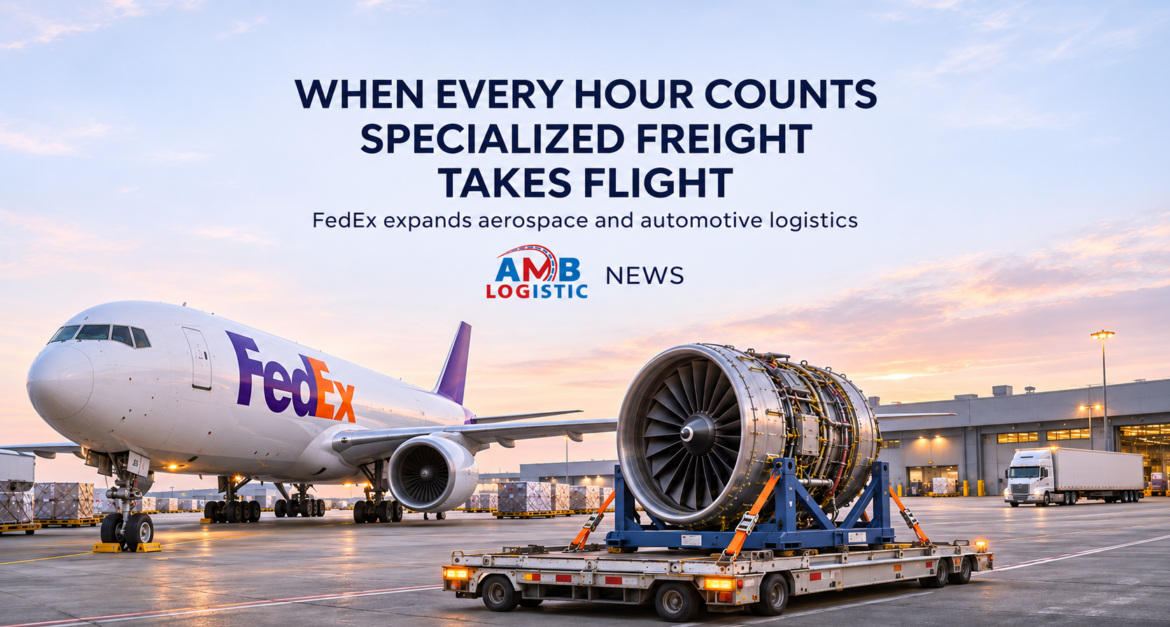
When Every Hour Counts
When an aircraft is grounded for maintenance or an automotive facility is waiting for a critical component, a shipment becomes part of a much larger operational timeline.
The freight may be oversized, time-sensitive, or subject to precise handling and documentation requirements. Moving it successfully requires coordination across the entire journey—from the first pickup to the final handoff.
That need is driving increased attention to specialized logistics. On November 3, 2026, FreightWaves reported that FedEx’s focus on dedicated aerospace and automotive services has helped the company win business involving aircraft engines and automotive parts.
For freight brokers and shippers, the development highlights the importance of designing transportation plans around the specific needs of the cargo and the operation depending on it.
FedEx Focuses on Industry-Specific Logistics
FedEx has been bringing together capabilities across parcel transportation, freight, freight forwarding, and trade compliance to support customers with complex logistics requirements.
Rather than treating every shipment as a standard move, dedicated teams can work with customers on transportation options, handling needs, documentation, and communication throughout the shipment lifecycle.
According to the report, FedEx’s efforts have produced customer wins in industries where downtime and supply chain interruptions can have significant consequences.
Aircraft Engines Bring a Different Level of Complexity
Aircraft engines are valuable, specialized pieces of equipment. Their transportation can involve manufacturers, airlines, maintenance providers, ground-handling teams, and freight operators.
FedEx has developed a dedicated process for moving aircraft engines and oversized components between locations such as manufacturers, repair facilities, and airline operations.
According to the company, it has transported hundreds of aircraft engines since June 2025. FreightWaves also reported that FedEx CEO Raj Subramaniam said engine movements had increased significantly from previous levels.
These movements require more than finding an available truck or aircraft. The transportation plan may need to account for the engine’s dimensions, weight, approved transport stand, handling equipment, pickup arrangements, and receiving capabilities.
For high-value industrial freight, the right equipment and the right handoff are as important as the departure time.
What Aircraft-on-Ground Logistics Means
The term aircraft on ground, often shortened to AOG, refers to situations in which an aircraft cannot operate and requires attention, such as a needed component or repair.
In an urgent AOG situation, a delayed part can affect maintenance schedules, aircraft availability, and flight operations. Logistics teams may therefore need to evaluate several transportation options quickly while coordinating with the parties responsible for pickup, handling, and delivery.
Depending on the shipment, options can include dedicated trucking, the next available flight, or a charter arrangement. The right choice depends on the cargo, route, urgency, handling requirements, and service availability.
Specialized teams can also coordinate shipment documentation and provide a clear point of contact as the freight moves through multiple stages.
Automotive Logistics Requires Its Own Planning
Automotive freight presents a different set of challenges. A shipment might involve production parts, replacement components, or materials moving between suppliers and manufacturing facilities.
For a production-related shipment, timing can be tied to a receiving window or manufacturing schedule. An issue at pickup or during a handoff can create pressure further down the supply chain.
FreightWaves reported that FedEx began serving 13 major automotive customers during the third quarter as it expanded its specialized automotive offering.
The company’s approach includes a dedicated team, around-the-clock support, flexible pickup capabilities, and improved shipment visibility.
Why Specialized Freight Matters to Brokers
For a freight broker, a complex shipment begins with a clear understanding of the customer’s operational requirements.
Two shipments with similar origin and destination points may need very different plans. A standard palletized load and an aircraft component may require different equipment, loading arrangements, handling instructions, and communication procedures.
Before arranging specialized freight, transportation teams should review:
- Dimensions and weight: Confirm the complete shipment measurements, including any crate, stand, pallet, or protective packaging.
- Equipment requirements: Identify the appropriate trailer or other transportation equipment for the load.
- Loading and unloading: Confirm who provides the equipment and personnel required at each facility.
- Securement and handling: Communicate cargo-specific instructions and any restrictions before pickup.
- Facility requirements: Verify access, operating hours, appointments, and site-specific procedures.
- Documentation: Identify the shipment records and any additional paperwork required for the movement.
- Communication: Establish who receives updates and how exceptions will be escalated.
These details help build a quote and service plan around the actual work involved in moving the freight.
Visibility Must Support the Entire Journey
Shipment visibility is most valuable when it helps the people responsible for the freight make timely decisions.
For a critical industrial shipment, a location update is useful—but the customer may also need confirmation that the freight was loaded correctly, that the receiving facility is ready, and that the next handoff remains on schedule.
If a delay or equipment issue occurs, the response depends on clear ownership: who is informed, who contacts the carrier or facility, and who communicates the revised plan to the customer.
That coordination becomes especially important when a shipment moves through multiple transportation providers or requires specialized handling at more than one location.
What Shippers Should Prepare Before Requesting a Quote
Shippers can improve the planning process by sharing complete and accurate information as early as possible.
For specialized freight, a useful request may include photographs, technical dimensions, total weight, packaging details, loading diagrams, required delivery timing, and contact information for the pickup and receiving teams.
It is also important to explain the operational importance of the delivery. A routine replenishment shipment may allow scheduling flexibility, while a component needed for an aircraft repair or production schedule may require a more time-sensitive plan.
The earlier these details are communicated, the easier it is to evaluate suitable equipment, discuss realistic service options, and identify potential obstacles before pickup.
The Bigger Picture for Freight Planning
FedEx’s specialized logistics strategy reflects a broader customer need for transportation services built around specific industries and shipment requirements.
For brokers and shippers alike, the opportunity is to look closely at the details behind each move: what is being transported, how it must be handled, who is responsible at each stage, and what happens if the plan changes.
When freight supports a critical operation, careful coordination creates a stronger foundation for reliable service.
Discuss Your Freight Requirements With AMB Logistic
Every shipment starts with its own set of requirements. AMB Logistic works with customers to understand their cargo, equipment needs, pickup conditions, and delivery commitments.
Whether you are planning an upcoming shipment or reviewing a transportation challenge, connect with our team to discuss the details that matter to your operation.
Contact AMB Logistic to discuss your freight needs.
Website: www.amblogistic.us
Email: info@amblogistic.us
Phone: +1 (888) 538-6433
Tags: Specialized Freight, FedEx Logistics, Aerospace Logistics, Automotive Logistics, Aircraft Engine Transportation, Aircraft on Ground, Freight Brokerage, Freight Forwarding, Time-Sensitive Freight, Supply Chain Planning, AMB Logistic