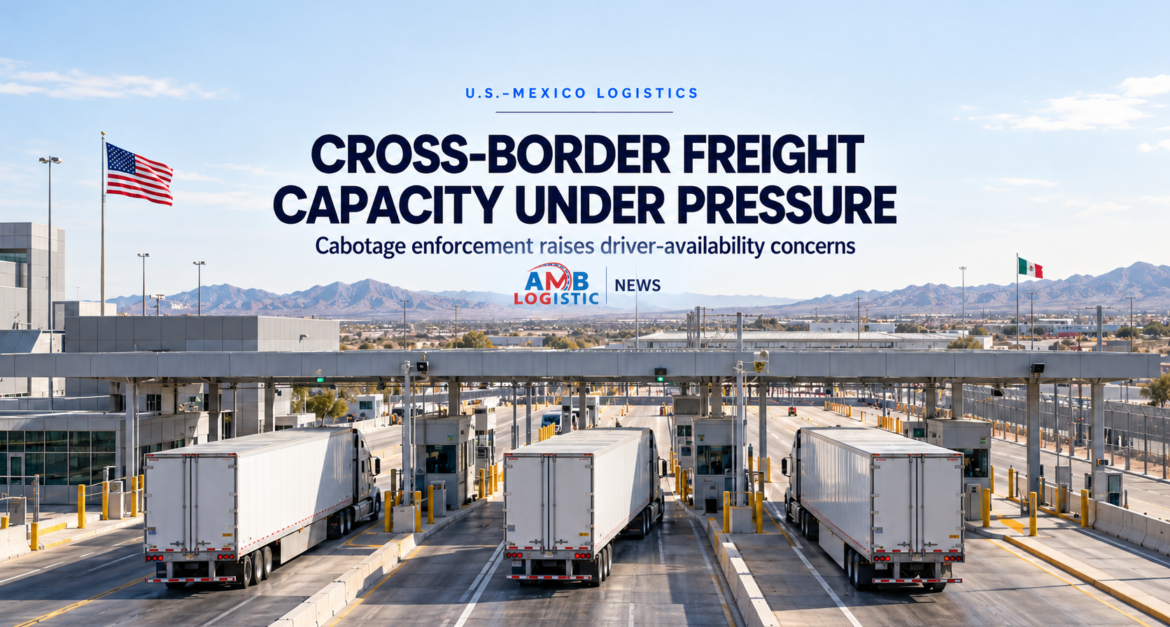
U.S.–Mexico Freight Capacity Faces New Pressure
A cross-border shipment depends on more than an available truck. The carrier, driver, documentation, border crossing, and delivery arrangements all need to work together. A disruption to driver availability can affect that entire plan.
That concern is drawing fresh attention following a November 1, 2026, report in which Knight-Swift Transportation CEO Adam Miller warned that increased U.S. cabotage enforcement could tighten cross-border trucking capacity.
For freight brokers and shippers managing U.S.–Mexico transportation, the development adds another consideration to shipment planning: whether the capacity scheduled today will remain available when the freight is ready to move.
What Knight-Swift Is Reporting
Speaking to FreightWaves at the WEX OTR Summit, Miller described increased scrutiny of Mexican drivers entering the United States. He said some drivers had faced visa revocations over alleged cabotage violations involving previous employers.
Knight-Swift operates in Mexico through its TransMex subsidiary, giving the company direct exposure to the operational challenges surrounding international trucking.
Miller’s concern is that intensified enforcement could discourage some drivers from crossing into the United States, potentially reducing the pool available for international shipments.
These comments describe a potential capacity risk. The report does not establish a quantified, nationwide reduction in cross-border driver availability.
Understanding Cabotage in Cross-Border Trucking
Cabotage generally refers to transportation between two points within the same country. In U.S.–Mexico trucking, the distinction between international cargo movements and domestic transportation is central to the applicable restrictions.
FMCSA guidance explains that Mexico-domiciled motor carriers are prohibited from providing U.S. domestic point-to-point transportation for goods other than international cargo. Carrier operating authority and the driver’s immigration status involve separate requirements, making the details of the movement important.
The current story concerns enforcement of existing restrictions. Its operational significance comes from how scrutiny may affect the drivers available to perform qualifying international transportation.
Why the Latest CBP Clarification Matters
An October 5 clarification from U.S. Customs and Border Protection’s San Diego Field Office addressed several misunderstandings involving B-1 drivers.
The regional bulletin states that there is no blanket 24-hour limit on a B-1 driver’s presence in the United States for qualifying international movements. It also explains that there is no general mileage restriction requiring those drivers to remain within 100 miles of the border.
The clarification identifies domestic point-to-point movement as central to a cabotage violation and discusses circumstances involving international deliveries, export pickups, and related activities.
For transportation teams, the practical lesson is to understand the actual shipment and movement arrangements rather than rely on an assumed time limit or mileage boundary. Specific operating plans require attention to the applicable carrier, driver, and border requirements.
How Driver Availability Can Affect a Shipment
Consider a manufacturer preparing a scheduled shipment from Mexico to a U.S. receiving facility. Production is complete, the delivery appointment is booked, and transportation has been arranged.
If the assigned driver becomes unavailable, the shipment may require a replacement driver, revised dispatch arrangements, or a different handoff plan. Each change can affect the timing of the next step.
A later departure can reduce the buffer before a receiving appointment. A revised handoff can introduce additional coordination. A missed appointment can create a need for rescheduling or temporary storage.
This is an illustrative planning scenario, rather than evidence that those outcomes are occurring across every crossing. It shows why driver availability deserves attention alongside equipment availability.
What Freight Brokers Should Review Before Committing
A dependable cross-border quote starts with a clear understanding of how the shipment will move. Transportation teams should establish the operating arrangement before presenting a firm service commitment.
- Shipment movement: Identify the origin, destination, international movement, and any planned intermediate handling.
- Carrier responsibilities: Establish which transportation provider performs each segment and who coordinates changes.
- Driver availability: Confirm the assigned capacity and the process for resolving a driver change before departure.
- Handoff arrangements: Document any planned transfer, interchange, or transloading activity and its scheduling requirements.
- Shipment documentation: Keep the paperwork consistent with the actual cargo movement and operating plan.
- Delivery requirements: Confirm receiving hours, appointment procedures, and the options available if timing changes.
A booked truck is one part of the service commitment. The complete movement needs a workable execution plan.
What Shippers Can Do to Improve Planning
Shippers can make transportation planning more effective by communicating the details that determine how much flexibility a shipment has.
A delivery feeding a production schedule may need a different contingency plan from a routine inventory replenishment. A facility accepting freight throughout the day offers different scheduling options from one with a narrow appointment window.
Useful information includes cargo readiness, equipment requirements, shipment value, facility restrictions, receiving appointments, and any planned storage or handling between origin and destination.
Discussing these requirements early gives the transportation team a clearer basis for evaluating coverage and identifying where additional time or an alternative arrangement may be appropriate.
What to Watch Next
The next meaningful indicators will be operational: changes in driver availability, carrier acceptance, crossing-specific service conditions, and the reliability of established transportation arrangements.
Conditions may vary by carrier, shipment structure, and port of entry. A broad warning about capacity deserves attention, while individual shipment decisions still require current information about the movement being planned.
The central issue for freight brokerage is maintaining a clear connection between the service quoted and the capacity, documentation, and coordination needed to execute it.
Plan Your Freight With AMB Logistic
Clear shipment requirements help build stronger transportation plans. AMB Logistic works with customers to understand their cargo, equipment needs, pickup conditions, and delivery commitments.
Whether you are reviewing an upcoming shipment or preparing for changing transportation conditions, start the conversation with the details that matter to your operation.
Contact AMB Logistic to discuss your freight requirements.
Website: www.amblogistic.us
Email: info@amblogistic.us
Phone: +1 (888) 538-6433
Tags: U.S.–Mexico Freight, Cross-Border Logistics, Freight Brokerage, Cabotage Enforcement, Driver Availability, Trucking Capacity, International Transportation, Knight-Swift, Supply Chain Planning, AMB Logistic