The Load That Never Arrived: Why Freight Brokers Must Treat Cargo Theft and Freight Fraud as an Immediate Operating Threat
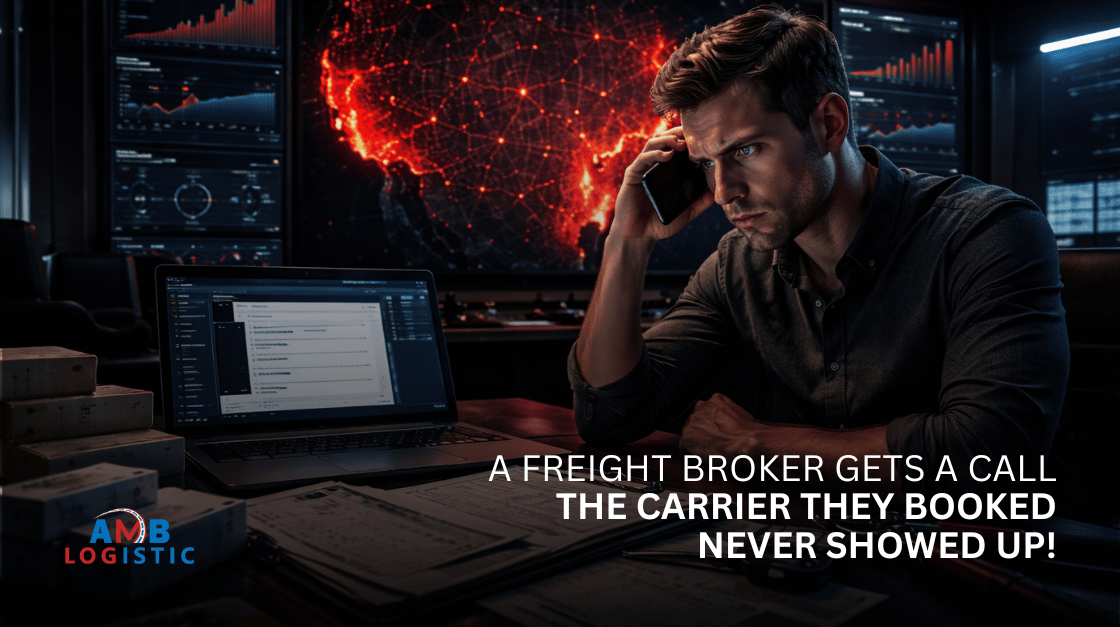
A freight broker gets the call no one wants. The carrier they booked never showed up. The load is gone. Eighty thousand dollars in electronics vanished into the system. The paperwork looked legitimate. The MC looked real. The insurance certificate looked clean. The email chain looked normal. And that is exactly why this story matters. Today’s freight criminals do not just steal cargo. They steal credibility, communication, and trust long before the shipment officially disappears.
Introduction
For years, many people in logistics pictured cargo theft as a physical crime. A trailer gets broken into. A truck disappears. A yard gets hit overnight. Those things still happen. But that is no longer the full story, and in many cases it is no longer the most dangerous version of the story.
The new threat often starts inside what looks like normal freight execution. A broker covers a load. A carrier packet checks out on the surface. A dispatch contact sounds credible. An insurance certificate arrives on time. A driver update seems routine. Then something breaks in the chain. The pickup was not handled by who everyone thought it was. The authority was cloned. The email was compromised. The insurance proof was fake. The load moves, but not toward its true destination.
That is what makes the modern cargo theft environment so dangerous. It does not always arrive dressed like a crime. It often arrives dressed like operations.
And that is why this topic matters so much for freight brokers, dispatch teams, carrier sales teams, and shipper-facing operations leaders. The issue is no longer whether fraud exists. The issue is whether a brokerage is disciplined enough to catch it before the freight disappears into a handoff that looked legitimate just long enough to pass.
Why This Matters
The human angle matters because numbers alone can still feel distant. A broker reads that cargo theft losses reached hundreds of millions of dollars and thinks, “That is serious.” But when a broker hears that a booked load of electronics vanished after being picked up by a fake carrier identity that looked real from every normal operating angle, the risk becomes immediate.
That is the shift the industry must fully absorb. Cargo theft is no longer only a security problem. It is a workflow problem. It is a verification problem. It is a communication problem. And if a brokerage still treats these risks like rare edge cases, the damage will not just be financial. It will be operational and reputational.
When a fraudulent carrier takes a load, several things happen at once:
- The shipper loses trust. They do not care that the fraud was sophisticated if the load is gone.
- The brokerage loses control of the narrative. Suddenly the team is explaining what happened instead of preventing it.
- The operation goes into recovery mode. Calls, claims, internal reviews, replacement freight, and escalations take over.
- The relationship gets tested. A single fraud event can damage months or years of customer confidence.
That is why a story like this cannot be dismissed as “one bad incident.” It reflects a much broader reality: criminals have learned that the easiest place to attack freight is often not the trailer. It is the trust layer wrapped around the trailer.
The Broader Picture
The reason these incidents are happening more often is simple. Criminals have evolved with the market.
They are no longer relying only on brute force or physical opportunity. They are exploiting the way freight actually moves:
- through TMS workflows,
- through email communication,
- through authority checks,
- through insurance documentation,
- through dispatch urgency,
- and through the broker’s natural need to solve problems quickly.
That is why cloned MC numbers, compromised email threads, spoofed identities, and fake insurance certificates are so effective. They do not look like theft at first. They look like freight moving.
The geographic spread matters too. This is no longer a narrow regional issue or a one-corridor problem. High-volume freight states and high-turn regions naturally become more attractive because they provide both target value and operational camouflage. A fake carrier can hide more easily inside a market where thousands of legitimate freight moves are happening every day.
High-value freight raises the risk further. Electronics, technology shipments, and other resale-friendly cargo are especially attractive because once they are gone, recovery becomes harder and resale becomes easier. That means the stakes of weak verification are no longer theoretical. They are immediate, measurable, and expensive.
What Freight Brokers Need To Do Now
The first thing brokers need to accept is that this is no longer a “new carrier only” problem. A brokerage can no longer assume that familiar paperwork or a previously known name equals safety on the current load. The threat now often lives inside the difference between what looks normal and what actually is normal.
That means the strongest brokerages need to operate with a different baseline:
- Every load requires verification, not just every new carrier setup.
- Every last-minute change requires renewed scrutiny, not convenience-based trust.
- Every high-risk lane or high-value commodity deserves stronger operating controls.
This is not about creating panic. It is about creating smart friction in the exact moments where fraud thrives.
The Freight Broker Playbook
1) Verify the communication path, not just the carrier file
One of the most dangerous mistakes in brokerage is assuming that a valid carrier record automatically makes the current communication valid too.
It does not.
The carrier may be real. The authority may be real. The company may be real. But the contact channel can still be compromised. The email thread can still be spoofed. The person giving the update can still be the fraud layer between the broker and the actual carrier identity.
That is why brokers need to verify:
- who is communicating,
- how they entered the conversation,
- whether that contact path is consistent with prior known records,
- and whether the identity details align across the full workflow, not just the documents attached.
2) Treat every last-minute carrier swap like a security event
Last-minute substitutions are where discipline gets tested hardest. The story always sounds reasonable. Driver issue. Equipment issue. Dispatch update. Route constraint. Small change, same load, same urgency.
But that is exactly why criminals like these moments. They arrive wrapped in operational plausibility.
A strong brokerage should never treat a last-minute swap as routine. If the carrier changes, the identity changes. And if the identity changes, the verification process must start again.
3) Elevate scrutiny on high-risk corridors and high-value freight
Some freight moves with a higher risk profile by default. Some regions, some lanes, and some commodity types simply deserve more attention.
Electronics freight, technology loads, and other high-value shipments should not move under the same verification posture as low-risk commodity freight. The same goes for lanes that operate through high-density freight regions where a fake pickup can more easily blend into legitimate activity.
Good brokers do not wait until something looks wrong in the middle of the move. They classify risk before the load ever gets tendered out.
4) Build anti-fraud friction into speed-driven operations
The answer is not to make freight slow. The answer is to make speed safer.
That means building friction into the exact points criminals try to exploit:
- pickup changes,
- contact changes,
- route changes,
- substitution requests,
- document anomalies,
- and unusual urgency coming from unfamiliar sources.
These moments should trigger stronger controls automatically. That is how a brokerage protects the move without freezing the operation.
5) Train teams to see what “looks legitimate” can hide
The modern fraud threat is effective because it often does not look sloppy. It looks normal enough to pass. That means teams must be trained to challenge things that feel close enough, not just things that are obviously fake.
The right training culture should teach people to question:
- unexpected contact changes,
- slight inconsistencies in identity details,
- document timing that feels too convenient,
- and communication patterns that suddenly shift under pressure.
In other words, the brokerage must learn to spot the fraud before the freight teaches the lesson the hard way.
6) Assume your brokerage will be targeted
This is the mindset shift many teams still resist.
The right question is no longer, “Would someone try this with us?” The right question is, “What part of our workflow would they try first?”
That mindset does not create fear. It creates readiness. And readiness is what keeps one fake pickup from becoming one expensive internal postmortem.
What This Means for AMB Logistic’s Audience
For freight brokers, carrier reps, dispatch managers, shipper-facing operations teams, and logistics leaders, the lesson is immediate: cargo theft and freight fraud are no longer separate from core service execution.
Customers want more than trucks and rates. They want confidence that the brokerage understands how today’s freight scams actually work. They want to know that the team handling the load is serious about identity verification, operational controls, and secure execution.
That means the broker’s role has expanded:
- from load coverage to load protection,
- from fast response to disciplined response,
- and from paperwork review to trust verification.
The broker who understands that shift will be better prepared than the one who still thinks the threat begins when the trailer is already gone.
AMB Logistic’s Role
AMB Logistic’s role in this environment is to build fraud resistance into real freight execution.
That means:
- load-level verification discipline,
- higher scrutiny on high-risk corridors and high-value freight,
- strict re-verification on carrier substitutions and routing changes,
- and an operating model that treats secure execution as part of the service itself.
In today’s freight market, protection is not separate from performance. Protection is performance.
FAQ
Why are these fraud cases harder to detect now?
Because they often imitate legitimate operations. The documents, contacts, and communication patterns may look normal enough to pass a rushed review.
What is the biggest broker mistake in this environment?
Trusting a load because it looks familiar. Modern freight fraud often succeeds by appearing routine until the freight is already gone.
What should brokers do immediately?
- Verify carrier identity on every load.
- Re-verify every last-minute substitution or change.
- Apply stronger controls to high-risk corridors and high-value freight.
- Train teams to question “almost legitimate” signals, not just obvious red flags.
Final Word From AMB Logistic
The most dangerous freight fraud is not the kind that looks criminal from the start.
It is the kind that looks operationally normal until the load is already gone.
That is why the question is not whether the industry should pay attention. The question is whether each brokerage is disciplined enough to protect itself before it becomes the next story.
The criminals have gotten smarter.
The process must get stronger.
And the brokers who survive this environment will be the ones who learn to verify trust before they verify movement.
Talk To AMB Logistic Today
Need stronger protection against cargo theft and freight fraud?
Call: +1 (888) 538-6433
Email: info@amblogistic.us
Web: www.amblogistic.us
Tags
freight brokerage, cargo theft, freight fraud, logistics, trucking, supply chain, carrier verification, AMB Logistic