Amazon Embeds LTL Freight Into Seller Central
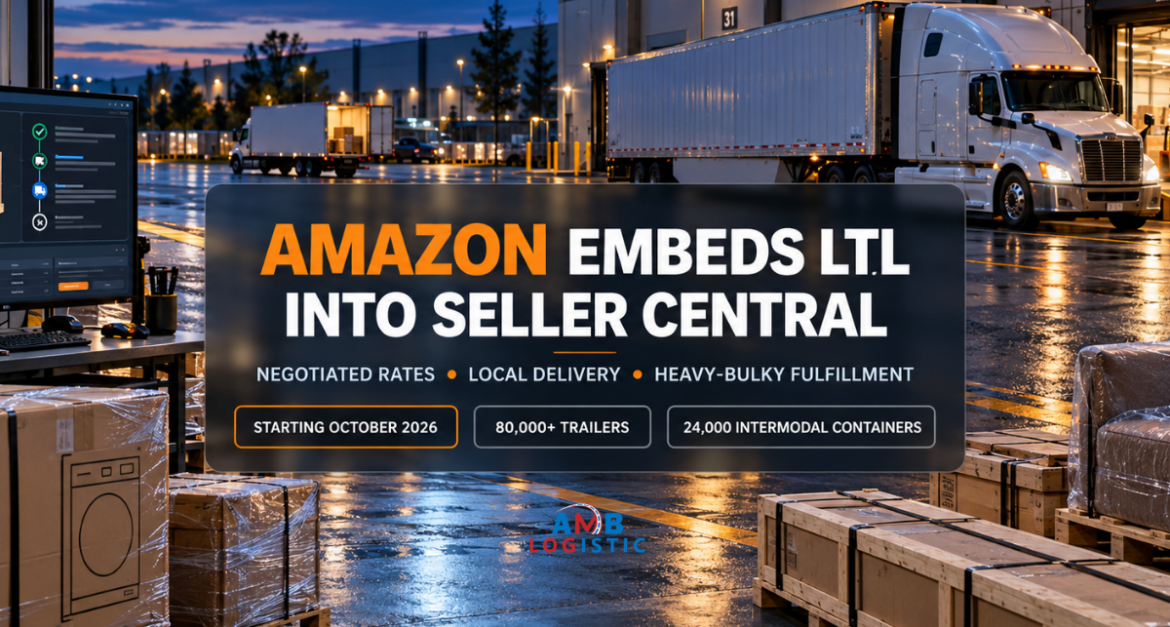
Beginning in October 2026, Amazon sellers will be able to purchase less-than-truckload transportation directly through Amazon Buy Shipping, bringing negotiated freight rates, label purchasing and shipment management into the Seller Central workflow.
The expansion is designed for heavy, oversized and palletized products that cannot move efficiently through conventional parcel networks. Instead of leaving Seller Central to contact carriers, compare rates and coordinate freight separately, eligible sellers will be able to manage more of the LTL purchasing process through one connected environment.
For sellers, this could make heavy and bulky fulfillment considerably easier. For freight brokers, carriers and third-party logistics providers, the larger story is that Amazon is moving transportation procurement closer to the original ecommerce transaction.
This is not simply another shipping option. It represents a broader change in how freight capacity may be purchased, managed and connected to commercial orders.
What Amazon Is Adding to Seller Central
Amazon Buy Shipping already allows sellers to purchase parcel transportation and print shipping labels without leaving their existing order-management workflow. The new LTL capability applies a similar experience to larger commercial shipments.
The planned capabilities include:
- Access to Amazon-negotiated LTL transportation rates
- Freight-label purchasing directly through Seller Central
- Support through connected third-party shipping software
- Centralized pickup and shipment coordination
- Tracking visibility within the seller’s existing workflow
- Late-delivery protection for qualifying shipments
- Delivery services designed for heavy and bulky products
The objective is to reduce the number of systems, carrier conversations and manual steps required to move an oversized order.
Instead of receiving an order in one platform and arranging transportation through another, sellers may be able to manage more of the process from one connected environment.
Why Heavy and Bulky Freight Requires a Different Workflow
Heavy and bulky freight cannot be treated like a larger parcel.
Furniture, appliances, industrial products, fitness equipment and other oversized goods may require pallets, liftgates, delivery appointments or specialized handling. Residential delivery may also involve curbside service, threshold placement, room-of-choice placement, installation or packaging removal.
Before one of these shipments moves, the seller must answer several important operational questions:
- Is the shipment weight accurate?
- Are the product dimensions correct?
- Is the commodity properly packaged and palletized?
- Does the pickup location have a loading dock or forklift?
- Will a liftgate be required?
- Does the receiver need a scheduled appointment?
- Is the destination commercially or residentially accessible?
- Who will manage damages, exceptions and returns?
These details determine whether the original freight rate remains accurate and whether the shipment reaches the customer successfully.
Amazon can simplify the purchasing interface, but the physical movement of oversized freight remains operationally complex.
Freight Procurement Is Moving Closer to the Order
Traditionally, transportation is arranged after the commercial transaction has already taken place.
The customer submits an order. The seller receives the information. Someone must then enter the shipment details into a carrier portal, freight marketplace or transportation-management system.
That separation can create additional work, delayed pickups and shipment-data errors.
By embedding LTL transportation into Seller Central, Amazon is beginning to connect the order, inventory, transportation option and customer commitment inside one workflow.
The process may increasingly look like this:
- A customer orders a heavy or oversized product.
- The seller confirms the shipment’s weight, dimensions and service requirements.
- The platform presents available LTL transportation options.
- The seller selects the service and purchases the freight label.
- Pickup, tracking and delivery updates remain connected to the original order.
The experience may feel similar to purchasing parcel transportation, even though a much more complicated freight network is operating behind the interface.
The Scale Behind Amazon’s LTL Expansion
Amazon is not entering this market as a small freight-technology provider.
Its broader transportation and supply-chain operations include more than 80,000 trailers and approximately 24,000 intermodal containers, supported by fulfillment centers, sortation facilities, delivery stations and external transportation partners.
That scale can help Amazon negotiate transportation capacity and develop more standardized shipping processes for participating sellers.
The company’s greater advantage may be its ability to connect transportation activity with information already generated by its marketplace.
This may include data involving:
- Customer demand
- Product characteristics
- Inventory positioning
- Shipping origins
- Delivery destinations
- Seasonal purchasing patterns
- Service performance
- Shipment exceptions and returns
This combination of commerce and transportation data could support better routing, pricing and capacity decisions across the network.
Amazon is not simply creating another place to buy an LTL rate. It is connecting freight procurement to an existing commercial ecosystem.
Regional Delivery Could Become the Next Major Layer
Amazon’s plans also extend beyond conventional terminal-based LTL transportation.
Regional delivery pricing for heavy and bulky products is expected to become a larger part of the offering in early 2027. Local transportation providers may support same-day or next-day deliveries within approximately 100 miles, depending on the product, market and available capacity.
Potential services may include:
- Scheduled residential delivery
- Room-of-choice placement
- Basic product installation
- Packaging removal
- Customer-service coordination
- Returns and reverse logistics
This matters because the final mile is frequently the most difficult part of heavy and bulky fulfillment.
A shipment can move successfully across several states and still result in a poor customer experience if the appointment is missed, the receiving location is inaccessible or the delivery team lacks the required equipment.
Connecting linehaul transportation with regional and local delivery services could help Amazon create a more consistent experience from the seller’s facility to the customer’s preferred delivery location.
What This Means for Freight Brokers
Amazon’s expansion does not eliminate the role of freight brokers, but it raises expectations around speed, visibility and convenience.
If a seller can obtain an LTL rate and purchase a freight label through the same platform used to manage orders, basic rate access becomes less valuable as a standalone service.
Freight brokers will need to demonstrate value beyond presenting a carrier price.
The strongest opportunities will remain in freight that requires experience, judgment and active intervention:
- Complex or unusual commodities
- Multi-stop and multi-modal shipments
- Expedited movements
- High-value freight
- Appointment-critical deliveries
- Capacity recovery following a carrier rejection
- Damage prevention and claims assistance
- Carrier verification and fraud prevention
- Customized shipper communication
- Exception management and recovery
Routine freight transactions will continue moving toward automation.
The broker’s competitive advantage will increasingly come from solving problems that a standardized digital workflow cannot resolve confidently.
What This Means for LTL Carriers
For LTL carriers, integration with a major ecommerce platform may create access to additional seller volume and more standardized digital shipment information.
It may also connect national, regional and local carriers with businesses that would otherwise struggle to arrange freight independently.
However, additional volume does not automatically mean better freight.
Carriers still require accurate shipment information before accepting a load:
- Correct weight and dimensions
- Clear commodity descriptions
- Appropriate freight classification
- Stable packaging and palletization
- Accurate pickup conditions
- Complete delivery requirements
- Correct accessorial selections
When these details are incorrect, the result can be reclassification charges, reweigh fees, billing disputes, missed appointments, damaged freight or delayed delivery.
The quality of the shipment data entering Seller Central will therefore be just as important as the convenience of the purchasing interface.
Convenience Does Not Eliminate Freight Risk
A clean digital interface can make freight purchasing appear simple. The physical shipment remains exposed to operational risk.
Sellers should continue verifying:
- Product weight and measurements
- Freight classification
- Commodity descriptions
- Packaging strength
- Pallet condition
- Pickup accessibility
- Delivery restrictions
- Required appointments
- Insurance limitations
- Claims procedures
- Return responsibilities
A low initial rate can become an expensive shipment when critical information is missing.
Unexpected accessorial charges, reweighs, reclassifications, storage fees and redelivery costs can quickly change the final transportation expense.
Technology can simplify freight procurement. Disciplined execution still protects the seller’s margin and customer relationship.
A Broader Change in Freight Technology
Amazon’s LTL expansion reflects a larger transformation across transportation and logistics.
Freight procurement is moving closer to the platforms where orders, inventory and customer commitments already exist.
Shippers increasingly expect transportation systems to provide:
- Immediate pricing
- Fewer manual steps
- Connected shipment data
- Real-time visibility
- Automated documentation
- Faster exception notifications
- Centralized performance reporting
This development will create pressure across the transportation market.
Carriers will need stronger digital connectivity. Freight brokers will need faster execution and more specialized expertise. Technology providers will need to connect pricing, capacity, documentation, tracking and exception management into a unified experience.
The future of freight procurement will not be determined only by who offers the lowest rate. It will be determined by who can connect the order, transportation capacity and customer experience with the least friction.
The Strategic Takeaway
Amazon’s move into embedded LTL purchasing is more than another feature inside Seller Central.
It is another step toward combining commerce, inventory, fulfillment and transportation inside one connected ecosystem.
For sellers, the immediate benefit is convenience.
For carriers, the platform may create new freight opportunities.
For freight brokers and 3PLs, the message is clear: basic transportation transactions will continue moving toward automation.
The most defensible value will come from reliable capacity, specialized knowledge, proactive communication, carrier verification, exception recovery and accountability from pickup through final delivery.
Amazon may simplify how LTL freight is purchased, but successful freight execution will still depend on the quality of the decisions behind every shipment.
Move Complex Freight With Greater Control
AMB Logistic helps businesses coordinate dependable freight transportation with responsive communication, qualified capacity and practical shipment support.
Whether you are managing routine commercial freight, heavy and bulky products or a time-sensitive shipment, our team is ready to help keep your supply chain moving.
Website: www.amblogistic.us
Email: info@amblogistic.us
Phone: +1 (888) 538-6433
Tags: Amazon Freight, Amazon Seller Central, Amazon Buy Shipping, LTL Freight, Less-Than-Truckload, Heavy and Bulky Shipping, Freight Brokerage, Third-Party Logistics, 3PL, Ecommerce Logistics, Freight Technology, Digital Freight, Transportation Management, Final-Mile Delivery, Regional Delivery, Freight Procurement, Supply Chain, Carrier Capacity, Freight Operations, Logistics Technology, AMB Logistic