The Cargo Theft Crisis by the Numbers: What Every Freight Professional Needs to Know Right Now
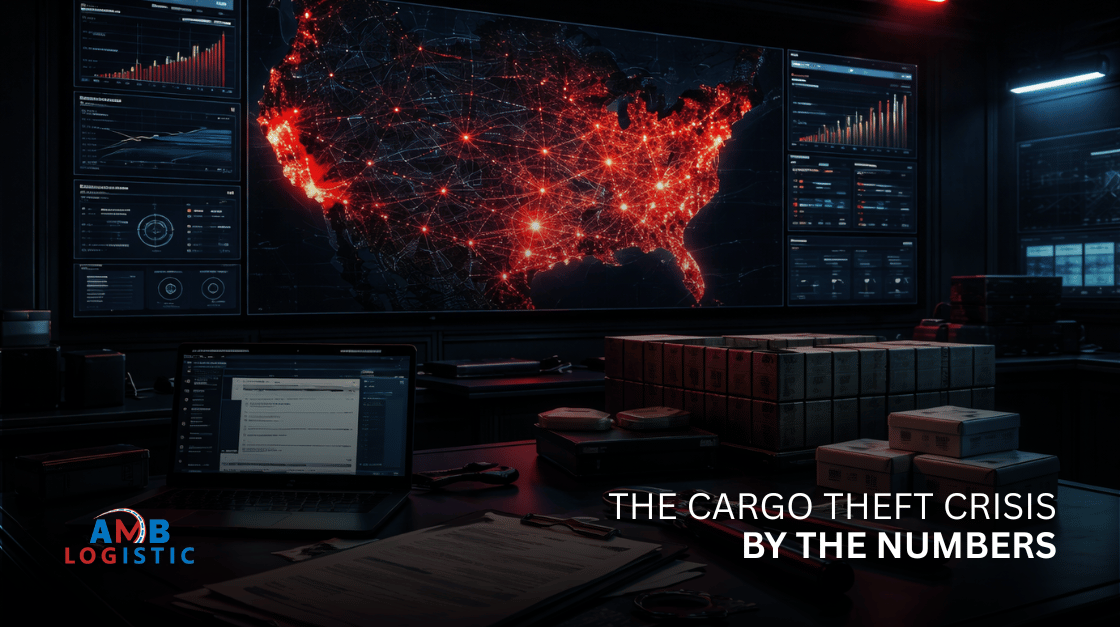
Cargo theft is no longer a side risk buried in insurance language or treated as an occasional industry headache. It has become a high-cost, fast-evolving operational threat hitting freight brokers, carriers, shippers, and supply chain teams at the same time. The losses are rising, the tactics are getting smarter, and the margin for sloppy verification is disappearing fast.
Introduction
There was a time when cargo theft was often discussed like a physical crime problem. A truck disappeared. A trailer was broken into. A load was taken from a yard. Serious, yes — but still seen by many as an occasional event happening somewhere else, to someone else.
That view no longer fits reality.
Today’s cargo theft environment is bigger, smarter, and far more operationally sophisticated. The losses attached to cargo theft have surged. Fraudulent freight activity has climbed. Quarter-over-quarter and year-over-year theft trends are pointing in the wrong direction. And the loads most criminals want are no longer random. High-value freight such as electronics, pharmaceuticals, and technology products has become increasingly attractive because it moves fast, sells fast, and often travels through pressure-heavy lanes where speed can override skepticism.
For freight professionals, this is the real takeaway: cargo theft is no longer just a crime issue. It is now a workflow issue. A verification issue. A brokerage process issue. A carrier-management issue. And if it is not treated that way, the consequences do not stop at a single lost shipment. They spread into claims, disputes, customer trust, carrier relationships, and operational chaos.
Why This Matters
Numbers matter because they remove denial.
When losses rise into the hundreds of millions, when year-over-year increases jump sharply, and when freight fraud continues expanding alongside physical theft, the industry has to stop treating these incidents as isolated bad luck. The data makes it clear that this is not occasional noise in the system. It is a recurring and escalating pattern.
That matters because freight moves on trust layered over speed. Brokers move quickly. Dispatch teams move quickly. Shippers want answers quickly. Carriers want freight covered quickly. Criminal groups understand that better than many operators realize. They know speed creates openings. They know familiar-looking paperwork lowers suspicion. They know identity fraud, cloned authority, hacked communications, and last-minute substitutions are more effective than brute force when the operating environment rewards fast decision-making.
So when the numbers climb, the real implication is not just that more cargo is being stolen. It is that the logistics system is being studied, tested, and exploited with increasing precision.
The Broader Picture
Cargo theft should never be understood only as a product-loss story.
A stolen shipment creates damage at multiple levels:
- Financial damage: lost freight, claim exposure, replacement costs, delays, and administrative burden.
- Operational damage: missed delivery windows, broken handoffs, emergency rebooking, and downstream disruption.
- Relationship damage: customer trust falls, carrier confidence weakens, and the brokerage’s reputation takes a direct hit.
That is why the current wave of cargo theft is so serious. The direct loss may show up in the value of the shipment, but the larger cost is what happens after the load is gone. Teams lose time. Customers lose confidence. Brokers lose control over the narrative. The load that disappeared is often only the start of the damage.
Geography matters too. High-volume freight states and major freight corridors naturally become more attractive because they offer both opportunity and cover. A criminal group does not always need unusual freight. It needs freight that can disappear inside normal activity without triggering immediate suspicion. That is why high-density states and high-turn corridors deserve more scrutiny, not less.
Commodity choice matters as well. High-value freight is a primary target because it offers fast resale value and often moves under tighter time pressure. When the cargo is sensitive, expensive, or event-driven, teams may move faster. And when teams move faster without stronger verification, risk rises.
What Freight Brokers Need To Do Now
The right response to rising theft is not panic. It is discipline.
Freight professionals need to stop thinking of verification as a one-time onboarding step and start thinking of it as a live operating function. A carrier that was legitimate on one shipment is not automatically safe on the next shipment if the contact path changed, the pickup instructions changed, the routing changed, or the identity trail suddenly became less clear.
If the threat is happening now, the response must happen now too. That means the best freight teams should already be doing three things:
- Verifying carrier identity on every load, not just on first setup.
- Applying added scrutiny on loads moving through high-risk corridors, especially major California and Texas flows.
- Treating last-minute carrier swaps as a security event that requires full re-verification.
These are not overreactions. They are baseline operating controls in a market where criminals increasingly rely on looking legitimate long enough to get the load.
The Freight Broker Playbook
1) Verify the carrier every single time
This is the biggest mindset shift the industry needs to make.
Too many teams still treat verification like a setup task. Carrier packet done, onboarding done, authority looks good, move on. That model is too weak for the fraud environment now in front of the industry.
Identity verification needs to happen at the load level. Not only when a carrier is new, but whenever the shipment itself is live. Because that is when fraud actors try to insert themselves — during real load movement, under real time pressure, using credentials that look close enough to pass a lazy review.
Brokers should be checking:
- communication consistency,
- contact path integrity,
- identity alignment across systems,
- and any sudden changes in who claims to be handling the load.
2) Flag high-risk corridors for added scrutiny
Not every lane deserves the same security posture.
If certain states and corridors consistently show higher theft pressure, then brokers should treat them accordingly. That does not mean shutting down freight. It means raising the standard of review:
- tighter verification,
- cleaner handoff controls,
- more skepticism around unusual changes,
- and stronger documentation around pickup and carrier confirmation.
Smart brokerages do not wait until a suspicious signal appears halfway through execution. They classify risk before the shipment moves.
3) Never accept a last-minute carrier swap without re-verification
This may be the most important practical rule in the entire cargo theft conversation.
Criminals thrive inside urgency. They know that a last-minute substitution sounds operationally normal. A truck issue. A driver issue. A dispatch issue. A route issue. Something small, something understandable, something that encourages the broker to move quickly and skip one more layer of review.
That is exactly where discipline matters most.
A last-minute carrier swap is not a minor convenience. It is a change in identity, and identity is the battlefield. If the carrier changes, verification must restart. No shortcuts. No assumptions. No “they sounded legitimate.”
4) Treat high-value freight like the target it is
Electronics, pharmaceuticals, technology products, and other high-value shipments deserve elevated treatment by default. Not because they are special in theory, but because they are targeted in practice.
High-value freight often travels with:
- higher urgency,
- tighter customer pressure,
- more sensitive timelines,
- and stronger financial consequences if anything goes wrong.
That makes it especially dangerous when teams let speed replace scrutiny.
5) Build anti-fraud friction into fast-moving operations
The answer is not to make brokerage slow. The answer is to add smart friction at the exact points where deception enters:
- carrier identity changes,
- contact changes,
- insurance inconsistencies,
- route changes,
- pickup changes,
- and last-minute substitutions.
Those moments should not feel like ordinary updates. They should trigger stronger review automatically.
6) Pay attention to what the data is really saying
The value of theft data is not awareness alone. The value is behavior change.
If the industry knows the crisis is escalating but continues using old assumptions, then the numbers become trivia instead of warning signals. The data should change:
- how brokerages train teams,
- how they classify lane risk,
- how they verify carriers,
- and how they respond to suspicious operational changes in real time.
What This Means for AMB Logistic’s Audience
For freight brokers, carrier sales teams, dispatch professionals, operations managers, and shipper-facing logistics teams, the message is direct: cargo theft is now a core operating discipline issue.
The strongest freight professionals will not simply know the numbers. They will understand what the numbers demand operationally.
That means:
- stronger verification culture,
- load-level security discipline,
- better risk classification by corridor and commodity,
- and far less tolerance for shortcuts disguised as urgency.
Customers are paying attention. Carriers are paying attention. And criminal groups are paying attention too. The only real question is whether the brokerage is paying close enough attention to stay ahead.
AMB Logistic’s Role
AMB Logistic’s role in this environment is not just to move freight. It is to move freight with stronger process control, sharper verification logic, and more disciplined protection around the moments that theft and fraud exploit most.
That means:
- load-level carrier verification,
- elevated corridor awareness,
- strict handling of substitutions and identity changes,
- and security-minded execution that protects both freight and trust.
FAQ
Why is cargo theft such a serious issue now?
Because it is increasing in scale and sophistication. The threat now includes organized fraud, identity manipulation, and workflow exploitation — not just physical theft.
What is the biggest broker mistake in this environment?
Treating verification like a one-time setup task instead of an every-load discipline.
What should freight brokers do immediately?
- Verify carrier identity on every load.
- Flag higher-risk corridors for added scrutiny.
- Refuse last-minute carrier swaps without full re-verification.
- Apply stronger controls to high-value freight.
Final Word From AMB Logistic
The cargo theft data does not just describe a problem. It describes a market reality.
The threat is already here. The tactics are already smarter. And the broker who still operates with yesterday’s verification habits is already behind.
The data does not lie.
The risk is not waiting.
And protection now has to move at the speed of freight.
Talk To AMB Logistic Today
Need stronger protection against cargo theft and freight fraud?
Call: +1 (888) 538-6433
Email: info@amblogistic.us
Web: www.amblogistic.us
Tags
cargo theft, freight fraud, freight brokers, trucking, FMCSA, supply chain security, carrier verification, double brokering, AMB Logistic