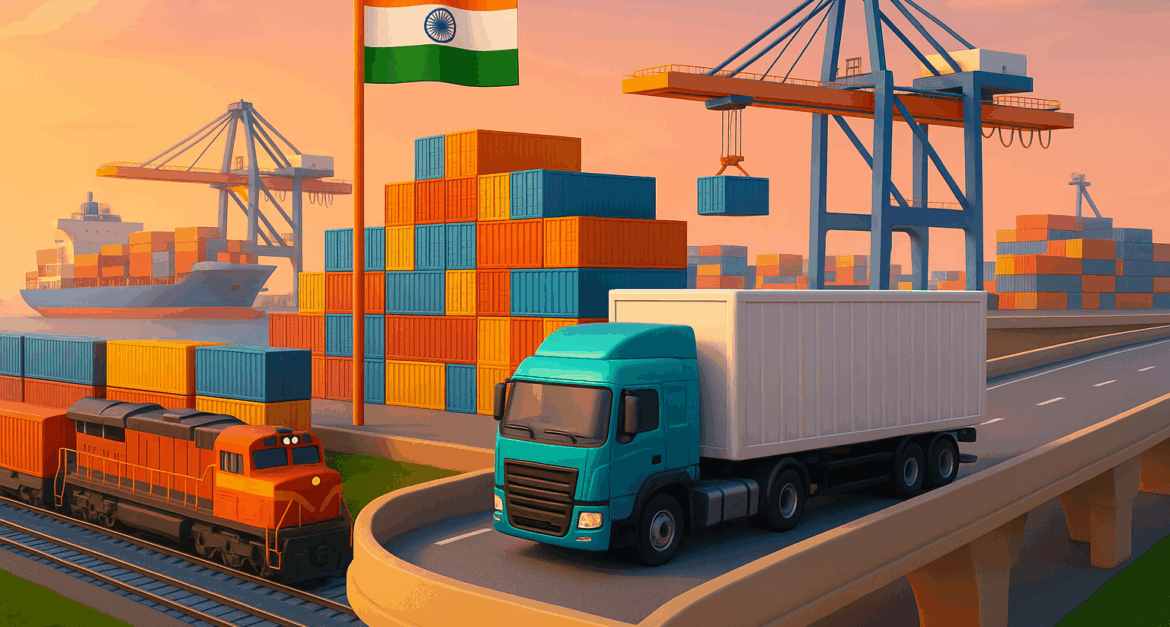
India Doubles Down on Logistics Infrastructure Amid Global Trade Shifts
How the World’s Fastest-Growing Economy Is Reinventing Its Supply Chain Core?
As the global supply chain landscape undergoes tectonic shifts, India is stepping up with strategic investments in its logistics infrastructure—laying the foundation for a more resilient, diversified, and modern supply ecosystem.
From the Digital India Logistics Policy to mega investments in multi-modal parks, port expansion, and dedicated freight corridors, the subcontinent is making its mark as a dependable logistics and manufacturing hub in the new world order.
Let’s dive into why this matters, what’s changing, and how global players—especially U.S.-based freight firms—can realign strategy to ride the India wave.
🌍 The New Trade Reality: From Global Efficiency to Regional Resilience
For decades, the world’s supply chains were built for lean, globalized efficiency—fueled by Just-in-Time practices and dependency on a handful of manufacturing epicenters.
But in the post-pandemic, post-conflict world, resilience has trumped cost. With rising tensions between the U.S. and China, recurring Black Swan events, and critical raw material chokepoints, nations and companies are reconfiguring trade relationships.
India, the world’s fifth-largest economy, is emerging as a viable “China+1” solution—offering scale, talent, and now, rapidly maturing logistics.
🏗️ Building India’s Logistics Superstructure: Key Investments
India’s logistics infrastructure is undergoing its most dramatic evolution in history. Here’s what’s in play:
1. PM Gati Shakti National Master Plan
A unified, GIS-mapped infrastructure platform integrating 16 ministries to fast-track 100+ logistics projects.
- $1.3 trillion+ infrastructure pipeline
- Ports, roads, rail, aviation — all under one digital window
- Focus on multi-modal efficiency and reducing logistics cost to 8% of GDP from ~14%
2. Dedicated Freight Corridors (DFCs)
Electrified rail lines exclusively for freight movement.
- 3,300+ km of network being rolled out
- Speeds up cargo from 25 km/h to up to 100 km/h
- Directly impacts lead time, fuel efficiency, and carbon reduction
3. Multi-Modal Logistics Parks (MMLPs)
Massive industrial zones designed for intermodal transfers and warehousing.
- Each park covers 100+ acres, with rail, road, and air linkages
- Locations: Nagpur, Chennai, Bengaluru, Surat, and more
- Reduces transshipment losses, turnaround times, and freight leakage
4. Port-Led Development via Sagarmala
Revamp and modernization of 577+ projects across India’s 7,500 km coastline.
- Smart port infrastructure
- Dredging, berth extension, and last-mile rail connectivity
- Boost to East Coast and West Coast transshipment
💻 Digitizing the Movement: Tech-First Freight Flow
India’s logistics transformation isn’t just physical—it’s digital too.
- ULIP (Unified Logistics Interface Platform): Integrates 30+ government systems into one API-based ecosystem
- E-Logs, E-Billing, and GPS mandates: Enhancing transparency and fleet accountability
- Drone corridors: Approved for last-mile deliveries in remote areas
The result? Real-time visibility, predictive planning, and better freight flow compliance for domestic and international players.
🏢 Why Global Shippers and U.S. Freight Companies Should Care
As India’s logistics superstructure rises, the entire trade equation with the U.S. is shifting. U.S. companies are:
- Nearshoring high-value manufacturing from China to India
- Establishing secondary supply nodes in Indian industrial zones
- Looking to integrate Indian suppliers via secure, trackable trade lanes
U.S.-based 3PLs, freight forwarders, and FTL/LTL specialists can now:
- Partner with Indian freight tech startups and logistics parks
- Expand trade lanes via India’s revamped port networks
- Offer last-mile solutions in India for U.S. importers/exporters
AMB Logistic, with its global operational vision, continues to monitor these trade evolutions closely to help our customers stay agile.
🧮 Metrics That Matter: India’s Logistics Growth by Numbers
- 📦 Logistics sector to hit $500 billion+ by 2030
- 🚚 200% YoY rise in intermodal shipments in 2024
- 🛳️ Maritime trade grew 16% in FY24 alone
- 🛤️ Rail freight carried 1.5 billion tons in 2023
- 🧠 India among the Top 5 logistics tech markets globally
📍 What It Means for Shippers, Carriers & Freight Strategists
In a nutshell:
✅ Diversify your routing strategy: Don’t wait for tariff hikes or another Suez-like disruption to rethink your sourcing.
✅ Map out Indian MMLPs and DFCs: Plan where your vendors can relocate, and how that affects time-in-transit.
✅ Monitor port modernization: U.S. East Coast shippers may find smoother lanes via India’s new deepwater ports.
✅ Integrate digital logistics tools compatible with ULIP and Indian APIs.
🧠 Final Word from AMB Logistic
As global freight routes realign, India isn’t just playing catch-up—it’s fast becoming a cornerstone of resilient global supply chains.
For shippers, importers, or supply chain managers planning for 2025 and beyond, keeping an eye on India’s logistics story isn’t optional—it’s essential.
At AMB Logistic, we help clients stay ahead of every geopolitical and infrastructural curve—building smarter, safer, and future-ready freight strategies.
📞 Let’s Plan Your Next Global Move
Whether you’re expanding your supply chain footprint or reassessing your import/export strategy with India, we’re here to help.
Contact AMB Logistic Today
📧 info@amblogistic.us
🌐 www.amblogistic.us
📍 HQ: 101 W Big Beaver Rd, Troy, MI
Tags:
IndiaLogistics, AMBGlobal, FreightResilience, SupplyChainTrends, LogisticsInfrastructure, IndiaUSTrade, GatiShakti, DFCs, MMLPs, AMBInsights, Intermodal, ExportIndia, LastMileLogistics, SmartPorts, GlobalTrade