Written in the narrative style of a leading management review, focused on operator and shipper takeaways.
Executive Summary
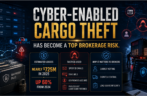
- Truck-based cargo theft is rising across major freight markets, with thieves shifting from smash-and-grab to strategic fraud: fictitious pickups, carrier impersonation, and double-brokering.
- Targeted commodities include electronics, food and beverage, automotive parts, apparel, and pharmaceuticals, with thefts clustering near ports, rail ramps, and freeway interchanges, often on weekends and holidays.
- Defenses that work are layered: rigorous carrier vetting, two-factor pickup authentication, eBOL and watermarking, seal discipline, covert trackers, geofenced handoffs, driver training, and rapid-response playbooks.
- AI adds lift by forecasting theft-prone moves, detecting route anomalies, and flagging document tampering before release.
- AMB opportunity: package security as a product—Border & Linehaul Integrity Suite—combining compliance, technology, and SOPs into measurable outcomes: fewer thefts, faster recovery, lower insurance loadings.
A Case-Study Lens: From “Lock It” to “Verify It”
Classic loss-prevention assumed that physical locks and high-visibility deterrents were enough. Today’s attackers are administrators with clipboards. They win before the truck moves by falsifying credentials, spoofing identities, and intercepting dispatch flows. The operating truth:
Most modern thefts are authorization failures, not hardware failures.
A resilient operation therefore shifts from “stronger locks” to stronger verification:
- Who is this driver? (identity + authority)
- Who dispatched them? (carrier + lane authority)
- What are they allowed to collect? (SKU/PO/BOL match)
- Where and when are they allowed to collect? (geofence + timeslot)
- What evidence confirms the handoff? (eBOL + photo + seal data)
When the answers are enforced digitally—before the yard gate—losses drop.
The Threat Landscape: How Thieves Actually Operate Now
Strategic Cargo Theft (paper-first attacks)
- Fictitious pickups: thief poses as the awarded carrier; presents forged documents that match the load.
- Carrier impersonation: hijacks a legitimate MC/DOT profile to pass onboarding.
- Double-brokering fraud: a “broker” reassigns the load to an unvetted carrier and disappears.
- Document manipulation: altered eBOL/COA/ID to change release details or destination.
Tactical Cargo Theft (field attacks)
- Straight theft/pilferage: break-ins at truck stops and unsecured yards.
- Swaps and relays: cargo moved quickly to a second tractor or box to defeat trackers.
- Drop-lot harvesting: thieves monitor chronic dwell spots and “hot-swap” trailers.
Patterns you can plan for
- Timing: weekend/holiday pickups, late-day releases, shift changes.
- Geography: one hour from ports/ramps, freeway cloverleafs, warehouse clusters.
- Commodities: high resale liquidity (phones, chips), low serial traceability (certain food and beverage), steady demand (auto parts, apparel).
The Controls That Work: A Layered Defense
1) Carrier & Driver Verification
- Closed network + tiered vetting: only pre-approved carriers by lane/commodity.
- Real-ID + authority match: photo/ID scan, live selfie, and license validation matched to TMS record.
- Insurance hygiene: verified policy, limits, and endorsements; alerts on lapses.
- No first-time carrier on high-value loads without executive override.
2) Pickup Authentication
- Two-factor pickup codes (2FPC): PIN delivered to the shipper’s contact + one-time QR for the driver app; both required to release.
- eBOL with watermarking: dynamic QR + cryptographic hash on line items; scanner flags any alteration.
- Photo capture: driver + tractor + trailer + seal, time-stamped and geotagged before exit.
3) Seal Discipline & Handoff Integrity
- High-security seals with unique IDs tied to the eBOL; dual-seal for HAZMAT/pharma.
- Geofenced seal-break authorization: seal may only be broken at designated nodes; unauthorized breaks trigger alerts and escalation.
- Two-person verification for high-value loads at open/close events.
4) Telematics & Covert Tracking
- Dual trackers: hardwired telematics plus covert BLE/GPS device hidden in cargo.
- Route-adherence geofences: deviations trigger call-down + safe-stop protocol.
- No-stop first 200 miles policy for high-value loads; pre-approved fuel points.
- Tamper and light sensors inside the trailer for door-open events.
5) Data Hygiene & Dispatch Security
- Principle of least privilege: restrict who can view/export BOL and rate confirmations.
- Watermarked docs: each export embeds buyer, PO, and timestamp to deter resale use.
- Two-channel confirmations: pickup locations never shared solely by email; confirm via broker portal or secure app.
6) People: Training & Playbooks
- Loader and guard scripts: challenge-response questions, red-flag checklists, deny/hold authority.
- Driver coaching: anti-tail, parking protocol, social-engineering tells, safe-stop routines.
- Incident drills: quarterly tabletop on fictitious pickup, route deviation, and yard breach.
Where AI Earns Its Keep (No Hype)
- Pre-release risk scoring: flags loads with elevated theft probability given commodity, time, location, and carrier history.
- Document anomaly detection: finds mismatches across BOL, rate con, and dispatch logs.
- Route anomaly detection: compares live trajectory to expected corridor; escalates fast.
- Agent assist: summarizes incident threads, pre-fills police/insurer reports, and assembles evidence kits.
- Marketplace hygiene: monitors for cloned carrier profiles and mismatched authority data.
Measure impact in: thefts per 1,000 loads, time-to-detection, recovery rate, false positives, insurance savings, and chargeback avoidance.
KPIs That Prove Security Is Working
- Theft/pilferage rate per 1,000 loads ↓
- Fictitious pickup attempts detected ↑; successful attempts ↓
- Time-to-detection (TTD) and time-to-escalation (TTE) ↓
- Recovery rate and value recovered ↑
- Seal violation rate ↓
- False positive alert rate steady or ↓
- Insurance premium or deductible adjustments favorable
- Chargebacks and customer penalties ↓
Scenario Planning 2025–2027
Base Case
- Strategic fraud remains elevated; thieves iterate.
- Response: tighter identity controls, broader covert tracking, faster escalation.
Upside Case
- Widespread eBOL adoption, marketplace cleanup, more secured parking.
- Response: standardize 2FPC, strengthen SOPs, harvest insurance benefits.
Downside Case
- Economic stress fuels theft; more sophisticated impersonation.
- Response: expand closed-network hauling, mandate two-person protocols, increase covert trackers on targeted SKUs.
Shipper Playbook: Buy Security as a Service
- SLA-tiered security by lane and commodity (economy/standard/premium).
- Dual-network coverage: primary closed network + vetted overflow.
- Pre-release discipline: eBOL, 2FPC, photo set, seal and tracker applied before gate.
- Geofenced milestones: enforce no-stop windows; approve deviations via app.
- Evidence first: incident kit built automatically—photos, telematics, eBOL hash, police file, insurer pack.
- Quarterly reviews: theft KPIs, premium impact, SOP refresh.
Carrier/3PL Playbook: Productize Integrity
- Security scorecards on every quote (lane risk, SOP level, trackers, seal type).
- Closed-loop verification (ID, authority, insurance) in TMS onboarding.
- Standard operating pictures at pickup: photo + seal + eBOL hash.
- Dual tracking standard for designated commodities and corridors.
- Rapid-response cadence: five-minute deviation call, 15-minute escalation, one-hour recovery team engage.
- Claims excellence: complete insurer packs within 24 hours; shorten payout cycles.
Practical Checklists
High-Value Load Checklist
- Pre-approved carrier (closed network)
- Driver ID + selfie verified; authority matched
- eBOL with dynamic QR + watermark issued
- High-security seal(s) applied; IDs in TMS
- Covert tracker placed; serial stored
- No-stop first 200 miles; fuel points pre-approved
- Geofences active; deviation rules armed
- Photo set captured and archived
- Incident escalation tree confirmed
Yard & Gate Checklist
- Guard script live; challenge-response verified
- Two-factor pickup code workflow tested
- Visitor and tractor plate capture
- Camera coverage on approach, dock, and egress
- Seal-check station staffed and logged
“People Also Ask” — Answer-Engine-Optimized FAQs
Q1. What is strategic cargo theft?
Document-led theft using impersonation, fictitious pickups, and paperwork tampering rather than force.
Q2. Which goods are most targeted?
Items with fast resale and weak serial traceability—electronics, certain food and beverage, auto parts, apparel, and sensitive pharma.
Q3. Where do most thefts happen?
Near ports, ramps, and freeway nodes—often within the first hour of movement or while parked.
Q4. What single control cuts risk the most?
Two-factor pickup authentication tied to eBOL plus photo and seal discipline.
Q5. Do trackers actually help?
Yes—dual trackers (overt + covert) improve recovery odds and deter opportunistic theft.
Q6. How does AI help without over-alerting?
By scoring risk before release and flagging specific anomalies; effectiveness is measured in fewer thefts and faster detection with stable false positives.
Q7. What’s the ROI case?
Lower losses, better recovery, reduced premiums/deductibles, fewer chargebacks, higher on-time performance, and preserved customer trust.
Q8. Is secured parking enough?
Helpful, but authorization controls and in-motion protocols are equally vital.
Q9. How should we respond to a suspected fictitious pickup?
Freeze release, verify via closed channel, preserve evidence, notify law enforcement and insurer, trigger recovery protocol.
Q10. What’s the role of the consignee?
Confirm seal integrity, reconcile eBOL hash, capture delivery photos, and report discrepancies immediately.
Conclusion: Make Integrity a Product, Not a Poster
Today’s cargo thieves exploit weak identity, loose documents, and slow escalation—not just weak locks. The answer is operational integrity as a product: codified SOPs, enforceable verification, measurable outcomes, and transparent pricing. When shippers buy certainty and carriers sell proof, theft loses its advantage.
AMB Logistic CTA
At AMB Logistic, security is engineered into the lane. Our Border & Linehaul Integrity Suite blends two-factor pickup, eBOL watermarking, seal discipline, dual tracking, AI-assisted anomaly detection, and rapid response—delivering fewer losses, faster clears, and lower landed-cost variance.
👉 Partner with AMB Logistic today.
📞 +1 888-538-6433 | 🌐 amblogistic.us
Tags (comma-separated)
cargo theft, truckload security, fictitious pickup, double brokering, carrier vetting, two-factor pickup, eBOL watermarking, seal discipline, covert trackers, geofenced handoffs, AI anomaly detection, incident response, insurance recovery, AMB Logistic
Hashtags
#AMBLogistic #CargoSecurity #Trucking #SupplyChain #Logistics #AIOperations #LossPrevention #SmartLogistics