CBP Tariff Refund Backlog & the “Rush-to-Ship” Wave: A Freight Broker’s Playbook for Timing Volatility in U.S. Imports
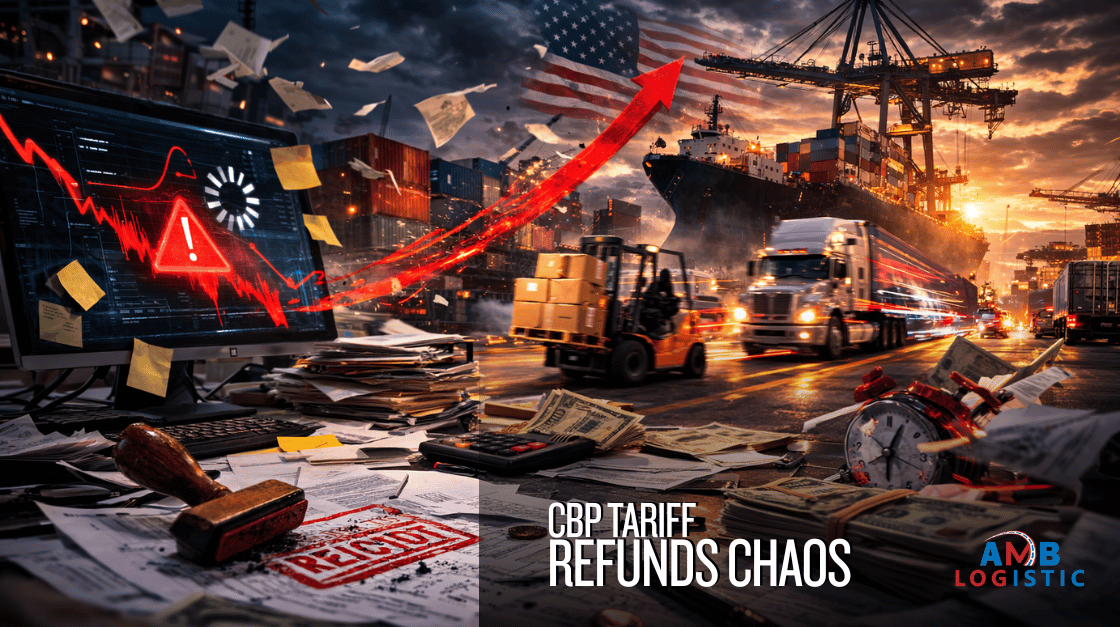
When tariff conditions shift and refund processing slows, importers don’t wait—they accelerate. That creates a predictable surge pattern at ports, in drayage, and across inland capacity. For freight brokers, this is not “just trade news.” It’s a timing-driven capacity event.
Introduction
Freight brokers are used to rate volatility. But tariff-driven volatility is different: it’s timing volatility.
When shippers believe there’s a short window to reduce landed cost—or when refund processing becomes uncertain—behavior changes fast.
Purchase orders get pulled forward. Bookings bunch up. Gate moves spike. Inland plans compress.
In moments like this, your customer isn’t asking, “What’s the market rate?”
They’re asking, “Can you get it done inside the window—without surprise fees, missed appointments, or a cashflow headache?”
This article is a freight-broker-first guide to the tariff refund backlog / tariff whiplash cycle:
what it does to U.S. logistics, what your customers will do next, where brokers get hurt, and how to run a clean playbook that protects service and margin.
Why This Matters
When importers can’t reliably predict how (or when) duty refunds will be processed, they don’t simply “wait it out.”
They become more conservative with cashflow and more aggressive with execution:
- More urgency: importers pull forward shipments to lock in perceived short-term advantage.
- More bunching: demand that should be distributed over weeks compresses into days.
- More port friction: appointments tighten, gate congestion grows, and drayage wait-time exposure rises.
- More accessorial risk: detention, demurrage, storage, re-delivery, and last-minute appointment fees show up more often.
- More downstream chaos: inland capacity gets repriced because everyone is trying to clear the same bottlenecks at the same time.
- More financial sensitivity: customers scrutinize invoices harder, challenge fees more, and delay approvals more—right when speed matters most.
The broker who wins in this environment is the one who sells certainty and execution, not just a truck.
Customers remember who protected the window and prevented surprises.
The Broader Picture
A tariff refund backlog isn’t only an accounting issue. It becomes a logistics multiplier because it changes importer behavior upstream and simultaneously
raises scrutiny downstream. You’ll typically see three operational phases:
- Phase 1: The sprint. Importers rush bookings and try to “get in before the window closes.”
- Phase 2: The squeeze. Ports, drayage, chassis, and appointments tighten. ETAs widen. Accessorials rise.
- Phase 3: The audit. Everyone becomes more invoice-sensitive. Disputes increase. Paperwork quality suddenly matters more than ever.
For freight brokers, the danger is assuming this is just another volume bump. It’s not.
It’s a coordination crisis where small mistakes create large losses.
What Freight Brokers Need To Do Now
When your customers start saying “rush,” “expedite,” “we need it cleared,” or “we’re pulling forward inventory,” run this checklist immediately:
- Separate critical freight from convenient freight. You need a “no-fail list” to protect capacity and prevent wasteful rescues.
- Time-box your quotes. In a sprint window, a quote is a perishable product. Treat it like one.
- Lock the handoffs first. Appointments, gate rules, and release readiness are more important than rate negotiation.
- Price time risk explicitly. If you don’t price detention and appointment friction, you will pay it out of margin.
- Control documentation quality. During refund/tariff sensitivity, customers dispute faster; clean paperwork protects you.
- Watch credit exposure. When cashflow is uncertain, payment behavior can change. Don’t let volatility turn into bad debt.
The Freight Broker Playbook
1) Quoting: How to protect margin in a “rush-to-ship” wave
In tariff sprints, the fastest path to margin loss is quoting like it’s a normal week.
Your job is to make assumptions visible and price the friction.
- Use a two-tier offer: Standard vs Protected. Protected includes appointment-first planning and tighter tracking cadence.
- Include a volatility clause: time risk (wait-time posture, reattempt policy, appointment changes) must be declared up front.
- Set quote validity: 12–24 hours during surge windows. Don’t carry old quotes into new congestion.
- Keep it clean: separate linehaul from accessorial posture so the customer understands what they are choosing.
2) Drayage and port strategy: Win the window before the truck even rolls
A tariff sprint is where drayage and terminal execution decide who looks like a hero and who looks unprepared.
- Appointment-first workflow: confirm terminal/warehouse appointment reality before dispatching a driver.
- Assume congestion: build buffer and communicate it early. Congestion surprises destroy trust.
- Chassis posture matters: if chassis availability tightens, you need a plan (and a price posture) before you get trapped.
- Second-attempt planning: every critical move needs a fallback plan if a gate/appointment fails.
3) Documentation discipline: The quiet place brokers lose money
During refund/tariff sensitivity, the tolerance for paperwork mistakes drops. The “small” issues become expensive:
wrong reference numbers, mismatched consignee details, missing pickup numbers, outdated delivery windows, incomplete contact chains.
- Standardize your tender packet: make it impossible to miss the essentials.
- Confirm release readiness: don’t dispatch on optimism; dispatch on confirmation.
- Document exceptions in real time: timestamps, photos, appointment screenshots—anything that prevents disputes later.
4) Inland ripple: Why port surges turn into domestic capacity events
When import surges bunch up, inland networks feel it next:
port-to-DC lanes tighten, intermodal ramps experience bunching, and truck availability reprices.
Freight brokers need to treat inland staging as part of the import plan—not as an afterthought.
- Pre-stage capacity for critical freight: reserve your most reliable carriers for the loads that protect customer relationships.
- Use windows, not timestamps: when upstream is unstable, rigid appointment expectations create failure.
- Define escalation triggers: “If release slips by X hours, we do Y.” This keeps you from improvising under pressure.
5) Customer communication: The script that keeps customers calm and loyal
In a tariff sprint, customers don’t want panic—they want a plan. Use this structure:
- What’s happening: “Tariff conditions and refund processing uncertainty are pushing importers to accelerate shipments.”
- What it changes: “Ports/drayage windows tighten, ETAs widen, and accessorial risk increases.”
- What we’re doing: “We’re locking handoffs first—appointments, release readiness, and staging capacity.”
- What we need from you: “Confirm your no-fail shipments and your approve-fast thresholds for exceptions.”
The broker advantage is calm clarity. A calm, structured update beats a reactive chain of apology emails every time.
How Freight Brokers Turn This Moment Into a Competitive Advantage
In rush windows, the market briefly rewards the broker who can execute like a control tower:
- Outcome-based selling: you sell “protected delivery windows,” not just “a truck.”
- Lower surprise fees: because you priced friction and staged handoffs instead of hoping for the best.
- Higher retention: customers remember who kept the plan intact when everyone else was scrambling.
- Healthier margins: because you time-boxed quotes and enforced accessorial posture.
AMB Logistic’s Role
Tariff-driven surges are timing games. AMB Logistic helps freight brokers and shippers win timing games by focusing on stability-first execution:
- Appointment-first coordination: protecting cutoffs and reducing missed windows.
- Exception management discipline: proactive handling when releases slip or congestion spikes.
- Routing and capacity options: practical alternates ready before the move becomes urgent.
- Communication cadence: clear updates, clear options, faster decisions.
The goal is straightforward: protect the window, protect the customer, and keep freight moving without drama.
FAQ
Why do tariff shifts create sudden spikes in freight demand?
Importers pull forward inventory when they believe there is a short-term financial advantage or a future increase risk. That demand bunching compresses bookings and tightens port and inland execution windows.
Where do brokers lose the most money during a tariff sprint?
In unpriced time risk: detention, missed appointments, reattempts, demurrage/storage exposure, and “rescue” decisions made without customer-approved thresholds.
What should we do in the next 72 hours?
- Build a no-fail shipment list with each major customer.
- Time-box quotes and separate linehaul from time-risk posture.
- Lock appointments and release readiness before dispatch.
- Pre-approve escalation triggers and exception budgets.
Final Word From AMB Logistic
When tariff refunds slow and shippers rush, the market becomes a test of operational discipline.
Freight brokers who win won’t be the loudest or the cheapest. They’ll be the clearest:
the ones who turn urgency into a plan, price time risk honestly, and protect the shipments that protect the business.
Talk To AMB Logistic Today
Need stability-first execution during tariff-driven surges?
Call: +1 (888) 538-6433
Email: info@amblogistic.us
Web: www.amblogistic.us
Tags
tariffs, CBP refunds, import surge, port congestion, drayage strategy, detention and demurrage, chassis availability, inland capacity,
freight brokers, exception management, AMB Logistic
“`